LOCKEDIN / FORWARD-DEPLOYED ENGINEERING 101
Understand it.
Then build it.
You can be an experienced engineer and still be new to agents. Start with what each thing is and how it helps a person do useful work. Explore 48 original introductions across software, agents, cloud, security and delivery. Start here without a model key; each topic connects to deeper instruction and practice.
- 101UnderstandPlain language, visual walkthrough, vocabulary
- 102Build with guidanceOriginal lessons, examples and knowledge checks
- 103Practise and explainRunnable labs, failure cases and handover
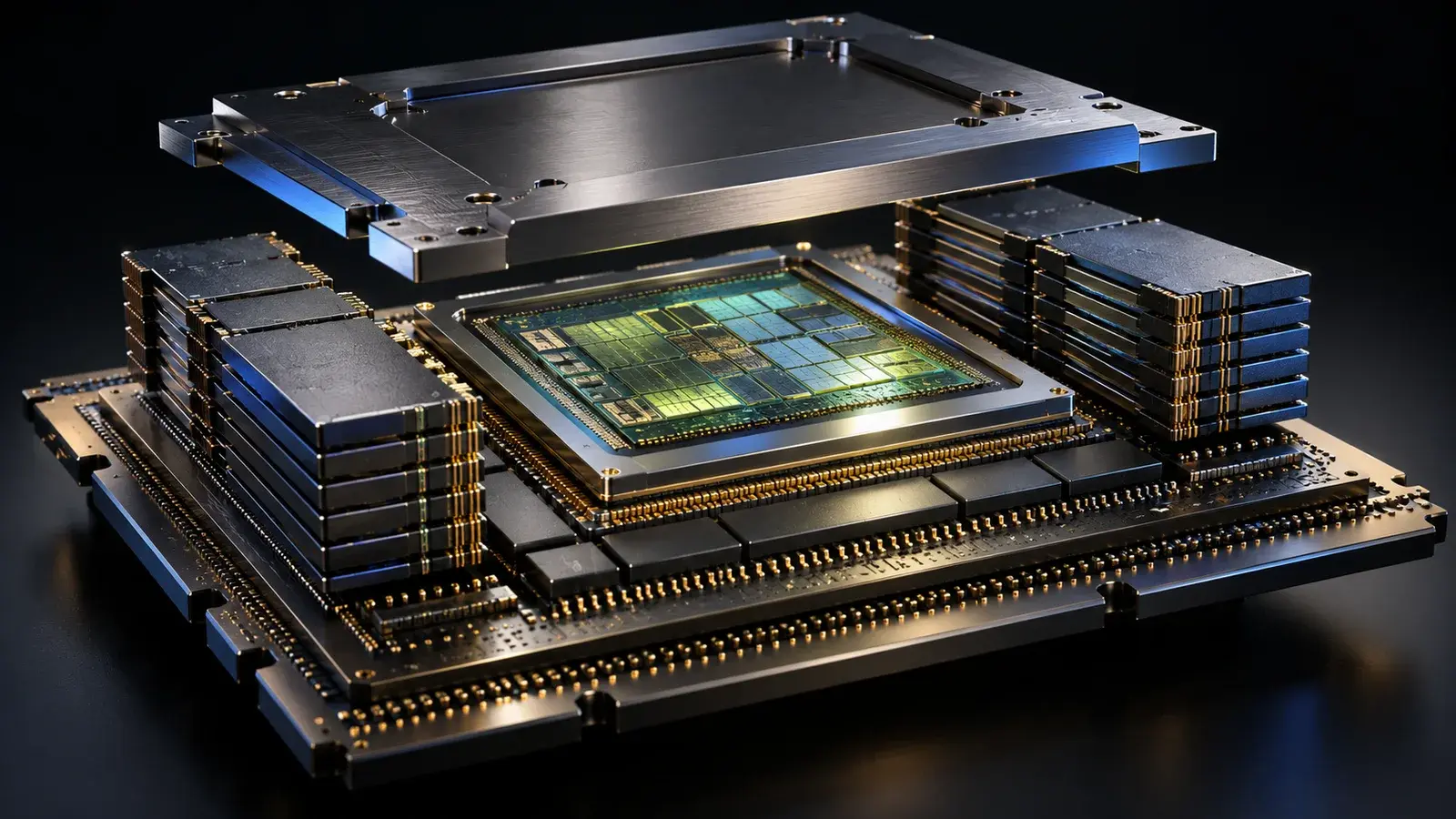 GPU / COMPUTE
- 01CPU: coordinate
- 02GPU: parallel math
- 03Memory: feed the work
A processor for parallel numerical work
What is a GPU, and why does AI use it?
A graphics processing unit, or GPU, is a processor built to perform many similar calculations concurrently. Neural networks contain large amounts of matrix arithmetic, so this design is useful beyond graphics. A CPU still coordinates the application, data loading and many decisions around the GPU.
You need to tell whether the workload benefits from acceleration before renting expensive capacity or promising a response time.
CONNECT IT TO WHAT YOU KNOW
Start with something familiar.
Imagine applying the same transformation to every row of a large table. Many workers can process different rows together, while a coordinator schedules the work. This resembles data parallelism you may already use in batch systems.
A GPU is hardware, not an AI model. Parallelism does not make every task faster: moving data, small workloads, dependencies and waiting for memory can dominate the useful computation.
Words worth knowing
- Kernel
- A function executed across GPU threads; not the operating-system kernel here.
- Tensor
- An array of numerical values, often with multiple dimensions.
- Tensor Core
- Specialized GPU hardware for supported matrix arithmetic and numerical formats.
ONE EXAMPLE / FICTIONAL CASE
Watch the work take shape.
The maintenance application validates a request on the CPU, sends numerical arrays to GPU kernels for model inference, then validates and presents the resulting draft.
GPU / COMPUTE- 01CPU: coordinate
- 02GPU: parallel math
- 03Memory: feed the work
Prepare
The CPU-side program validates input and prepares data for the model.
A bounded input batchFROM RECOGNITION TO REASONING
Separate parallel work from coordination.
- 01
List authorization, matrix multiplication, source lookup and response rendering.
- 02
Identify which could benefit from GPU numerical acceleration.
- 03
Name a measurement that would show whether data movement dominates.
A CPU/GPU responsibility sketch and a measurement question.
Compare your reasoning when you are ready
Matrix arithmetic is the main acceleration candidate in this list. Moving authorization onto a model or buying a GPU to fix an external service delay would target the wrong responsibility.
Keep notes in your own working copy. Moving through these cards does not record completion.
TURN THE IDEA INTO USEFUL WORK
You can now go deeper.
A GPU accelerates suitable numerical work; the rest of the application still matters.
Academy lessons use your existing training access. Free guides stay open.