LOCKEDIN / FORWARD-DEPLOYED ENGINEERING 101
Understand it.
Then build it.
You can be an experienced engineer and still be new to agents. Start with what each thing is and how it helps a person do useful work. Explore 48 original introductions across software, agents, cloud, security and delivery. Start here without a model key; each topic connects to deeper instruction and practice.
- 101UnderstandPlain language, visual walkthrough, vocabulary
- 102Build with guidanceOriginal lessons, examples and knowledge checks
- 103Practise and explainRunnable labs, failure cases and handover
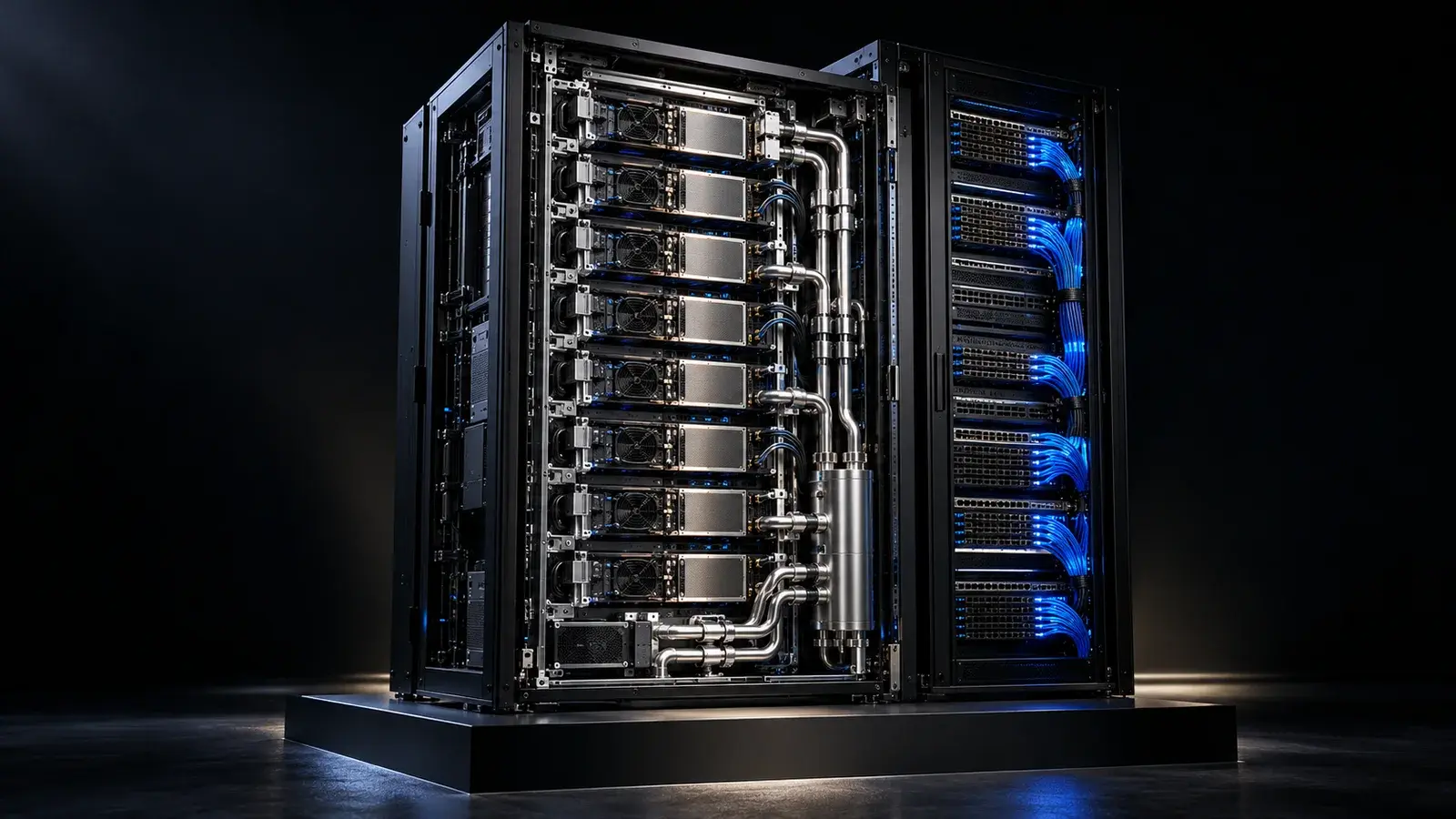 INTERCONNECT / SYSTEMS
- 01GPU + memory
- 02NVLink domain
- 03Cluster network
GPU generations, interconnects and complete systems
How do modern GPU systems work together?
A modern AI system combines GPU compute, memory, processors, networking, storage, power and cooling. Blackwell and Rubin name NVIDIA architecture generations. A chip, a server and an NVL72 rack are different purchasing and operating units.
An FDE must translate 'latest GPU' into a workload, a compatible complete system and a dated availability check.
CONNECT IT TO WHAT YOU KNOW
Start with something familiar.
Think of a distributed database cluster: a faster node helps only if storage and communication can keep up. Adding nodes changes coordination costs as well as available capacity.
NVLink connects supported GPUs within a scale-up domain; Ethernet or InfiniBand can connect systems at a larger scale. Neither means arbitrary GPUs become one unlimited pool. Runtime support and topology determine how a workload is partitioned.
Words worth knowing
- Scale up
- Combining resources in a tightly connected system or domain.
- Scale out
- Adding networked systems, with distributed execution and communication costs.
- HGX / DGX
- NVIDIA platform and system product families; inspect the exact configuration rather than treating the names as GPU chip models.
ONE EXAMPLE / FICTIONAL CASE
Watch the work take shape.
A team compares an existing Hopper installation with Blackwell Ultra and Vera Rubin options. It keeps the same model, quality bar, input lengths and concurrency when designing the evaluation, then asks suppliers for deliverable configurations.
INTERCONNECT / SYSTEMS- 01GPU + memory
- 02NVLink domain
- 03Cluster network
Compare the mechanism
Look at supported precision, memory, bandwidth and communication rather than a single headline operations-per-second figure.
A workload-specific comparisonFROM RECOGNITION TO REASONING
Compare two complete system proposals.
- 01
Name the precise SKU and GPU count in each proposal.
- 02
Record memory, supported precision, interconnect, power/cooling and support.
- 03
Separate vendor claims from your workload measurements and dated delivery commitments.
A comparison sheet with missing evidence visibly marked.
Compare your reasoning when you are ready
Different precision, batching and workload lengths can make headline performance numbers incomparable. The purchase decision needs your acceptance workload and a deliverable system, not only the newest architecture name.
Keep notes in your own working copy. Moving through these cards does not record completion.
TURN THE IDEA INTO USEFUL WORK
You can now go deeper.
Current architecture references checked 19 October 2026: Blackwell/Blackwell Ultra and Vera Rubin. Recheck availability before a purchase decision.
Academy lessons use your existing training access. Free guides stay open.